
Buttercream Flower Cake Recipe
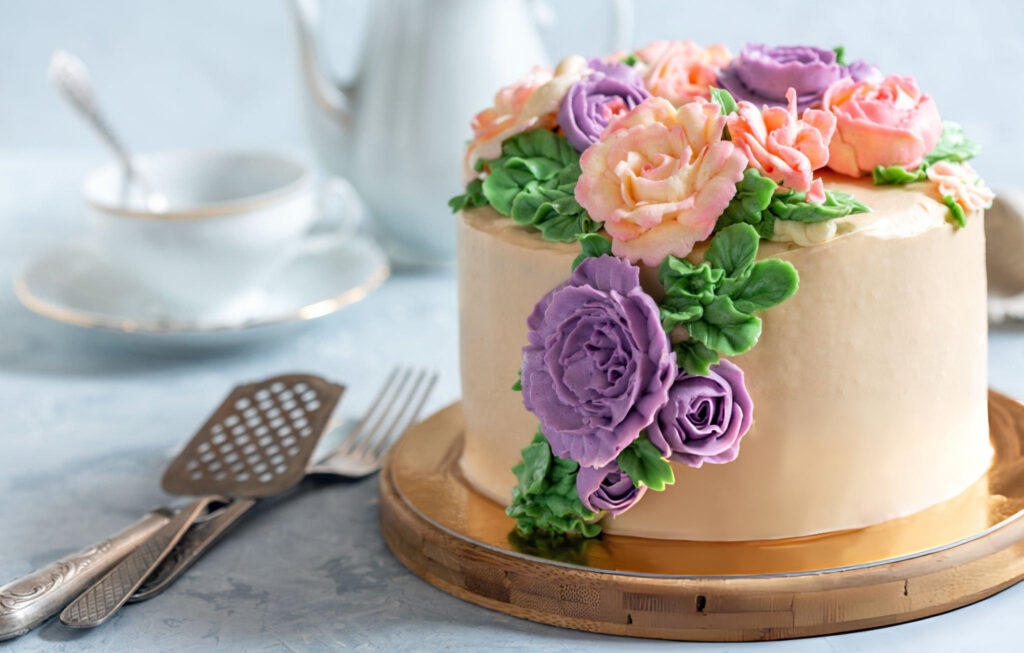
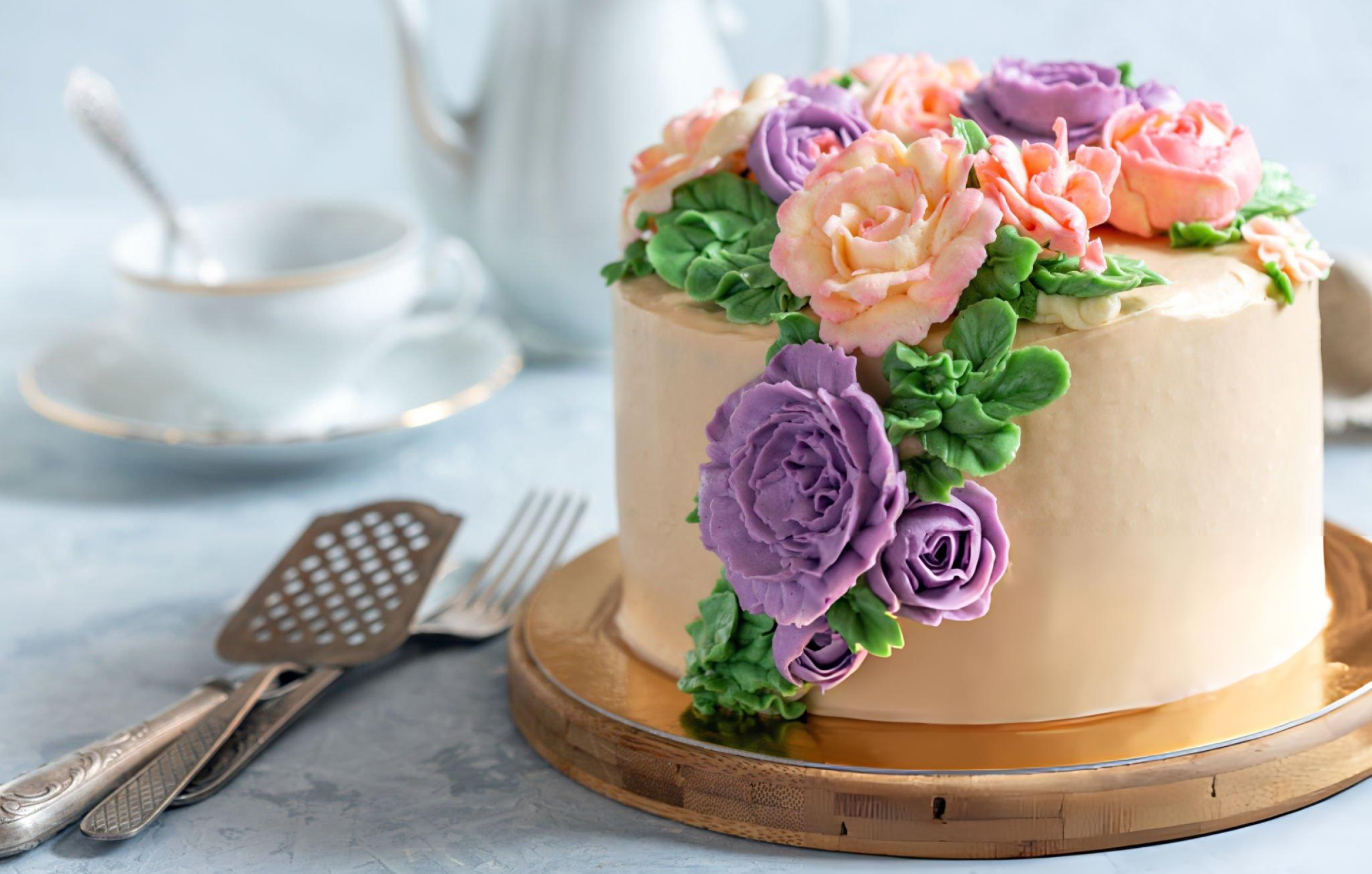
Buttercream Flower Cake is a timeless dessert that effortlessly combines classic vanilla cake with elegant buttercream artistry. Whether it’s served at a birthday party, bridal shower, anniversary, or afternoon tea, this beautifully decorated cake instantly becomes the centerpiece of the celebration. Delicate buttercream flowers transform a simple layer cake into an impressive creation that looks as stunning as it tastes.

Ingredients You’ll Need
Every component of this recipe has a specific purpose in creating a cake with exceptional texture, flavor, and stability. The cake itself begins with pantry staples including all-purpose flour, baking powder, and salt, which provide the structure while ensuring a light and delicate crumb. Properly sifting the dry ingredients helps distribute the leavening evenly, resulting in consistently soft cake layers.
The wet ingredients contribute richness and moisture throughout the cake. Vegetable oil keeps the crumb exceptionally tender, while sour cream adds a subtle tanginess and creates a velvety texture. Eggs provide structure, vanilla extract enhances the overall flavor profile, and room-temperature milk helps the batter blend together smoothly for an even bake.
The buttercream frosting is equally important. High-quality unsalted butter forms the luxurious base, while powdered sugar creates stability and sweetness. Vanilla extract adds warmth, heavy whipping cream produces a smooth, pipeable consistency, and a small pinch of salt balances the sweetness. If desired, gel food coloring can be incorporated to create vibrant buttercream flowers in virtually any shade, allowing endless customization for different occasions.
Step-by-Step Instructions
Begin by preparing the vanilla cake batter with care. Cream together the sugar, vegetable oil, eggs, and vanilla until the mixture becomes smooth and slightly fluffy. Incorporating the sour cream at this stage enriches the batter while contributing moisture that remains noticeable long after baking. Separately, sift together the flour, baking powder, and salt before gradually alternating the dry ingredients with the milk. Mixing only until everything is incorporated prevents overdeveloping the gluten, helping produce remarkably soft cake layers.
Divide the batter evenly among three prepared cake pans to ensure uniform layers that stack neatly. Baking at the proper temperature allows each layer to rise evenly while developing a light golden color. Rotating the pans midway through baking encourages consistent heat distribution, and testing with a toothpick confirms the cakes are fully baked. Once removed from the oven, allow the layers to cool thoroughly before trimming away any domed tops. Flat cake layers create a more stable structure and produce a polished finished appearance.
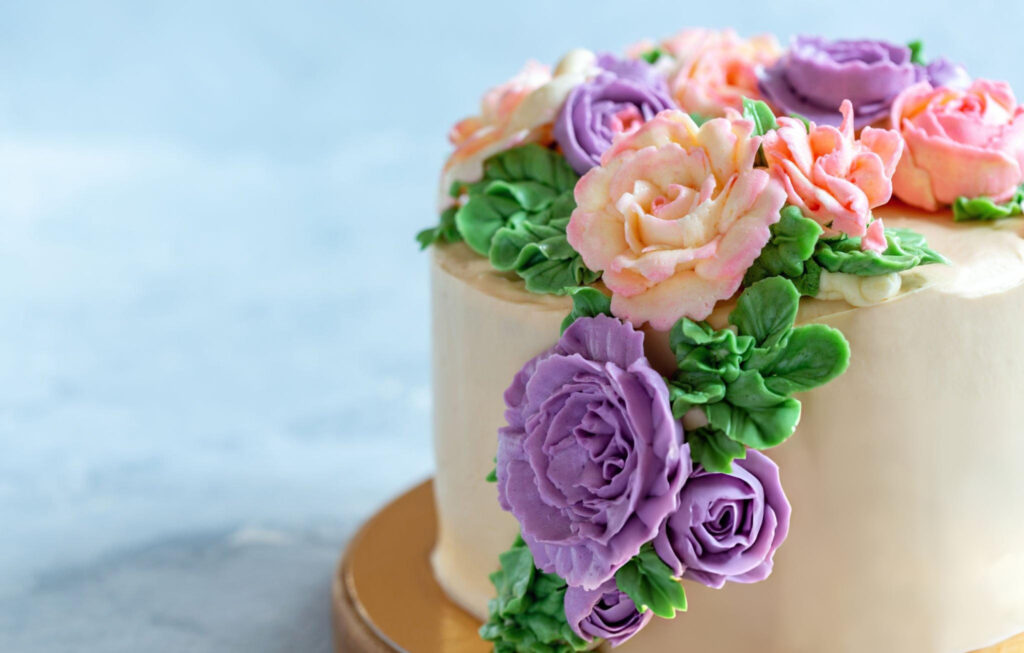
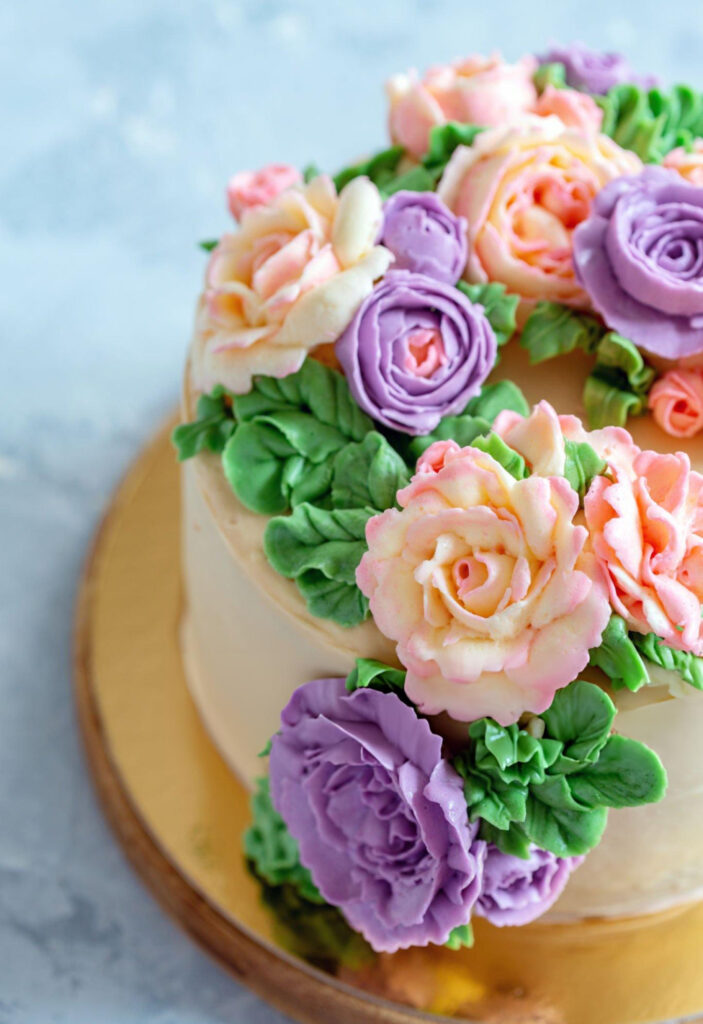
While the cakes cool, prepare the buttercream by whipping the butter until exceptionally light and airy before gradually incorporating the powdered sugar. Alternating the remaining sugar with heavy cream creates a frosting that’s smooth enough for spreading yet firm enough for piping decorative flowers. After eliminating excess air bubbles, assemble the cake by layering buttercream between each cake layer and applying a thin crumb coat. Once chilled briefly, finish with a final layer of frosting and smooth the surface using an icing scraper. Complete the design by piping elegant buttercream flowers and decorative accents, creating a sophisticated floral display that transforms the cake into an edible work of art.
Recipe Tips
- How to Achieve a Soft, Moist Cake Every Time: Use room-temperature ingredients whenever possible to create a smooth, evenly mixed batter. Measure the flour accurately and avoid overmixing after adding the dry ingredients to preserve a tender crumb.
- Secrets to Perfectly Smooth Buttercream: Whip the butter thoroughly before adding powdered sugar to develop a light texture. Finish by mixing the frosting on low speed and smoothing it with a spatula to eliminate unwanted air pockets.
- Simple Techniques for Beautiful Buttercream Flowers: Chill the frosting slightly if it becomes too soft while piping. Practice flower designs on parchment paper before decorating the cake, and transfer successful flowers to the cake after briefly chilling them.
- Helpful Piping Tips for Beginners: Use quality piping bags fitted with flower tips such as rose, petal, and leaf nozzles. Maintain consistent pressure while piping to produce uniform petals with realistic dimension.
- Common Cake Decorating Mistakes to Avoid: Never frost warm cake layers, as the buttercream will melt and become difficult to smooth. Applying a crumb coat before the final layer also prevents loose crumbs from appearing in the finished decoration.
What to Serve With This Recipe
The delicate vanilla flavor pairs wonderfully with a variety of beverages and complementary desserts. Freshly brewed coffee, cappuccino, latte, or Earl Grey tea provide a pleasant contrast to the sweet buttercream, while chamomile or jasmine tea offers a lighter accompaniment for afternoon gatherings.
Cold beverages are equally refreshing, especially during celebrations. Sparkling lemonade, iced tea, fruit-infused water, vanilla milkshakes, or chilled berry punch complement the cake without overpowering its subtle vanilla notes.
For an elegant dessert table, pair this Buttercream Flower Cake with fresh berries, chocolate-covered strawberries, French macarons, mini fruit tarts, or delicate butter cookies. Garnishing each slice with edible flowers, fresh raspberries, mint leaves, or a light dusting of powdered sugar enhances both the presentation and the overall dining experience.
Storage and Make-Ahead Tips
Proper storage keeps the cake tasting fresh while preserving the decorative buttercream flowers. Store leftover cake in an airtight cake container in the refrigerator for up to four days. Before serving, allow slices to rest at room temperature for about 30 minutes so the buttercream softens and the cake regains its delicate texture.
The cake also freezes well. Individual cake layers can be wrapped tightly in plastic wrap followed by aluminum foil and frozen for up to two months. Buttercream may also be prepared in advance and refrigerated separately. Before using, allow it to reach room temperature and rewhip until smooth and fluffy.
Preparing components ahead of time can make decorating day much less stressful. Bake the cake layers one day in advance, prepare the buttercream ahead of schedule, and even pipe individual buttercream flowers onto parchment paper for chilling. Once firm, the flowers can be transferred onto the finished cake with minimal effort, producing clean, professional-looking decorations.
Frequently Asked Questions
- Can I Make This Cake in Different Pan Sizes? Yes. The batter works well in round, square, or sheet cake pans, although baking times should be adjusted according to the pan size and depth.
- Which Butter Works Best for Buttercream? Unsalted butter with a high butterfat content produces the smoothest texture and richest flavor while allowing better control over the frosting’s salt level.
- Can I Use Store-Bought Frosting Instead? Store-bought frosting can be used for convenience, but homemade buttercream offers superior flavor, texture, and piping consistency for decorative flowers.
- How Do I Keep Buttercream Flowers Firm? Refrigerate the decorated flowers briefly before serving, especially in warm environments. Keeping the cake cool helps maintain crisp petal shapes.
- What Piping Tips Are Best for Flower Decorations? Petal, rose, leaf, and star piping tips are among the most popular choices for creating realistic floral designs with varying textures.
- Can I Color the Buttercream with Gel Food Coloring? Absolutely. Gel food coloring produces vibrant shades without thinning the buttercream, making it ideal for detailed floral decorations.
- How Far in Advance Can I Decorate the Cake? The cake can be fully decorated one to two days before serving and stored in the refrigerator until needed.
With careful preparation and a little patience, this cake offers endless opportunities for personalization through different flower styles, colors, and decorative arrangements. Whether designed with delicate pastel blooms or bold seasonal colors, every finished cake becomes a beautiful expression of creativity and craftsmanship while delivering rich vanilla flavor in every bite.
Ingredients
For the Cake
- 3 large eggs
- ½ cup (118 ml) vegetable oil
- 2 cups (380 g) granulated sugar
- 1 tablespoon (14.8 ml) pure vanilla extract
- ½ cup (120 g) sour cream, at room temperature
- 1¼ cups (296 ml) milk (any variety), at room temperature
- 2½ cups (350 g) all-purpose flour, sifted
- 3 teaspoons (11.2 g) baking powder
- 1 teaspoon (5 g) salt
For the Buttercream Frosting
- 2½ cups (565 g) unsalted butter, cold and cut into pieces
- 8 to 10 cups (1041–1301 g) powdered sugar
- 1 tablespoon (15 ml) pure vanilla extract
- 2 to 3 tablespoons (30–45 ml) heavy whipping cream
- Pinch of salt
Instructions
For the Cake
- Preheat your oven to 350°F (175°C). Prepare three 8-inch round cake pans by lining the bottoms with parchment paper and lightly greasing the sides. If you have bake-even strips, wrap them around the pans for more evenly baked cake layers.
- In a large mixing bowl, combine the granulated sugar, vegetable oil, eggs, and vanilla extract. Beat on medium speed until the mixture becomes smooth and fully blended, pausing occasionally to scrape down the sides and bottom of the bowl. Add the sour cream and continue mixing until the batter is creamy and well incorporated.
- In a separate bowl, sift together the all-purpose flour, baking powder, and salt to evenly distribute the leavening agents and remove any lumps.
- Add half of the dry ingredient mixture to the wet ingredients, followed by half of the milk. Mix on low speed just until combined. Repeat with the remaining flour mixture and milk, stirring only until the batter is smooth. Finish by folding the batter with a spatula, scraping the bottom and sides of the bowl to ensure everything is evenly incorporated without overmixing.
- Divide the batter evenly among the prepared cake pans, using approximately 1⅔ cups of batter per pan. Smooth the tops with a spatula.
- Bake for 20 to 23 minutes, rotating the pans halfway through baking to encourage even browning. The cakes are ready when a toothpick inserted into the center comes out clean or with just a few moist crumbs attached.
- Remove the cakes from the oven and let them cool in the pans for several minutes before transferring them to a wire rack. Allow the layers to cool completely before frosting.
For the Buttercream Frosting
- Place the cold butter pieces into the bowl of a stand mixer fitted with the paddle attachment. Beat on medium speed for 5 to 7 minutes, scraping the bowl occasionally, until the butter becomes pale, light, and exceptionally fluffy.
- Add 3 cups of powdered sugar and mix on low speed until fully incorporated. Pour in the vanilla extract and continue mixing for about 1 minute.
- Add another 2 cups of powdered sugar and mix on low speed until combined. Increase the mixer speed to medium-high and whip the frosting for 3 minutes to create a light, airy consistency.
- Continue adding the remaining powdered sugar 1 to 2 cups at a time, alternating with small amounts of heavy whipping cream. Mix on low speed after each addition, then increase to medium-high for a couple of minutes to develop a silky, spreadable frosting.
- Add a pinch of salt to balance the sweetness. To eliminate excess air bubbles, reduce the mixer to its lowest speed and mix for about 1 minute. Finish by stirring the frosting gently with a spatula to achieve an ultra-smooth texture.
To Assemble the Cake
- Once the cake layers have cooled completely, use a cake leveler or serrated knife to trim any domed tops, creating flat, even layers.
- Spread a small amount of frosting onto your cake board or serving plate to anchor the cake. Position the first cake layer on top.
- Fill a large piping bag fitted with a wide round piping tip—or simply trim the end of the bag—and pipe approximately 2 cups of frosting over the first cake layer. Begin around the outer edge and work toward the center before smoothing the frosting with an offset spatula.
- Place the second cake layer on top and repeat the frosting process. Finish by adding the third cake layer.
- Pipe frosting into any gaps between the layers, then apply a thin crumb coat over the top and sides of the cake. Smooth the frosting with an angled spatula or cake scraper, removing any excess while leaving a thin, even coating. Discard any crumb-coated frosting that contains cake crumbs rather than returning it to the mixing bowl.
- Apply the final layer of buttercream over the entire cake using an offset spatula or a large piping bag fitted with a cake icing tip. Smooth the top and sides with an icing smoother until the finish is clean and even.
- Decorate the cake with buttercream flowers and additional piping details as desired. Chill briefly before serving to help the frosting set and maintain crisp decorative edges.
Buttercream Flower Cake Recipe
Ingredients
For the Cake
- 3 large eggs
- ½ cup 118 ml vegetable oil
- 2 cups 380 g granulated sugar
- 1 tablespoon 14.8 ml pure vanilla extract
- ½ cup 120 g sour cream, at room temperature
- 1¼ cups 296 ml milk (any variety), at room temperature
- 2½ cups 350 g all-purpose flour, sifted
- 3 teaspoons 11.2 g baking powder
- 1 teaspoon 5 g salt
For the Buttercream Frosting
- 2½ cups 565 g unsalted butter, cold and cut into pieces
- 8 to 10 cups 1041–1301 g powdered sugar
- 1 tablespoon 15 ml pure vanilla extract
- 2 to 3 tablespoons 30–45 ml heavy whipping cream
- Pinch of salt
Instructions
For the Cake
- Preheat your oven to 350°F (175°C). Prepare three 8-inch round cake pans by lining the bottoms with parchment paper and lightly greasing the sides. If you have bake-even strips, wrap them around the pans for more evenly baked cake layers.
- In a large mixing bowl, combine the granulated sugar, vegetable oil, eggs, and vanilla extract. Beat on medium speed until the mixture becomes smooth and fully blended, pausing occasionally to scrape down the sides and bottom of the bowl. Add the sour cream and continue mixing until the batter is creamy and well incorporated.
- In a separate bowl, sift together the all-purpose flour, baking powder, and salt to evenly distribute the leavening agents and remove any lumps.
- Add half of the dry ingredient mixture to the wet ingredients, followed by half of the milk. Mix on low speed just until combined. Repeat with the remaining flour mixture and milk, stirring only until the batter is smooth. Finish by folding the batter with a spatula, scraping the bottom and sides of the bowl to ensure everything is evenly incorporated without overmixing.
- Divide the batter evenly among the prepared cake pans, using approximately 1⅔ cups of batter per pan. Smooth the tops with a spatula.
- Bake for 20 to 23 minutes, rotating the pans halfway through baking to encourage even browning. The cakes are ready when a toothpick inserted into the center comes out clean or with just a few moist crumbs attached.
- Remove the cakes from the oven and let them cool in the pans for several minutes before transferring them to a wire rack. Allow the layers to cool completely before frosting.
For the Buttercream Frosting
- Place the cold butter pieces into the bowl of a stand mixer fitted with the paddle attachment. Beat on medium speed for 5 to 7 minutes, scraping the bowl occasionally, until the butter becomes pale, light, and exceptionally fluffy.
- Add 3 cups of powdered sugar and mix on low speed until fully incorporated. Pour in the vanilla extract and continue mixing for about 1 minute.
- Add another 2 cups of powdered sugar and mix on low speed until combined. Increase the mixer speed to medium-high and whip the frosting for 3 minutes to create a light, airy consistency.
- Continue adding the remaining powdered sugar 1 to 2 cups at a time, alternating with small amounts of heavy whipping cream. Mix on low speed after each addition, then increase to medium-high for a couple of minutes to develop a silky, spreadable frosting.
- Add a pinch of salt to balance the sweetness. To eliminate excess air bubbles, reduce the mixer to its lowest speed and mix for about 1 minute. Finish by stirring the frosting gently with a spatula to achieve an ultra-smooth texture.
- To Assemble the Cake
- Once the cake layers have cooled completely, use a cake leveler or serrated knife to trim any domed tops, creating flat, even layers.
- Spread a small amount of frosting onto your cake board or serving plate to anchor the cake. Position the first cake layer on top.
- Fill a large piping bag fitted with a wide round piping tip—or simply trim the end of the bag—and pipe approximately 2 cups of frosting over the first cake layer. Begin around the outer edge and work toward the center before smoothing the frosting with an offset spatula.
- Place the second cake layer on top and repeat the frosting process. Finish by adding the third cake layer.
- Pipe frosting into any gaps between the layers, then apply a thin crumb coat over the top and sides of the cake. Smooth the frosting with an angled spatula or cake scraper, removing any excess while leaving a thin, even coating. Discard any crumb-coated frosting that contains cake crumbs rather than returning it to the mixing bowl.
- Apply the final layer of buttercream over the entire cake using an offset spatula or a large piping bag fitted with a cake icing tip. Smooth the top and sides with an icing smoother until the finish is clean and even.
- Decorate the cake with buttercream flowers and additional piping details as desired. Chill briefly before serving to help the frosting set and maintain crisp decorative edges.